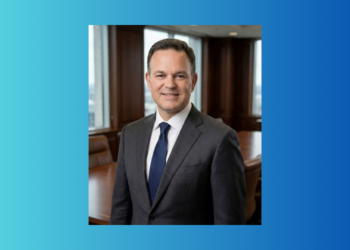

During retail-focused webinar hosted by Insolvency Insider, Bradley W. Snyder, executive managing director at Tiger Group, said Canadian mall owners are well-positioned to acquire key retail tenants in their portfolios in the months ahead.
Mall landlords across North America need to avoid triggering co-tenancy provisions that allow other tenants to pay lower rents or exit properties altogether, Snyder explained during “The New Retail Restructuring Playbook,” a November webinar hosted by Dina Milivojevic, editor of Insolvency Insider.
Several U.S. mall owners, often in partnership with lenders and/or brand companies, have already made investments geared toward keeping the doors open at Brooks Brothers, Forever 21, Aeropostale and JCPenney for this reason.
“I expect that will happen a lot more in Canada because Canadian landlords, while they are fewer in number, are backed by large pension funds and have the cash to do it,” Snyder said.
Top Canadian mall owners include Cadillac Fairview, owned by the Ontario Teachers’ Pension Plan, and Ivanhoe Cambridge, a subsidiary of institutional fund manager Caisse de dépôt et placement du Québec.
In the U.S., Snyder noted, cash constraints may prevent some mall landlords from buying struggling tenants in coming months.
“In the states, there have been several bankruptcies of REITs in just the past week,” he said. “Simon is flush with cash, but not all of the [U.S.] landlords are.”
According to Milivojevic, the retail-themed webinar was spurred in part by high-profile insolvency filings in Canada by retailers such as Aldo, Reitmans, Laura’s Shoppe, Davids Tea and Mountain Equipment Co-op. Many of her questions to Snyder hinged on the status of retail liquidations, as Tiger Group has partnered on headline-making dispositions throughout the pandemic, including selective store-closure projects and chainwide liquidations for New York & Co., Modell’s, JCPenney and Stein Mart.
Snyder’s co-panelists were Sandra Abitan, managing partner and insolvency and restructuring partner at Osler, Hoskin & Harcourt; and Martin Rosenthal, managing partner of strategy and transactions for Ernst & Young.
The potentially devastating impact of a COVID-19 “second wave” on Canadian retailers and malls was among the topics discussed by the panel, with participants noting that Manitoba has emerged as the first province to again mandate the closure of nonessential stores.
While Canadian retailers have no certitude about the future, Snyder noted they can be certain of the need to focus on two strategic priorities.
“It is about liquidity, liquidity, liquidity as well as maintaining valuable, long-term relationships,” Snyder said. “Everybody has to collaborate. To the extent that collaboration doesn’t happen, struggling retailers just can’t survive.”
On the liquidity front, Snyder noted some retailers have already moved to improve their positions.
“Just by way of example, in June, Macy’s went from a cash-flow loan to an approximately $4.5 billion (U.S.) [asset-based lending] facility,” Snyder said. “It was all about holding onto as much cash as they could to give themselves additional flexibility.”
Other North American retailers are using excess square footage for fulfillment and/or driving traffic via curbside pickup and other conveniences, he added. Meanwhile, shifts in consumer behavior are strengthening sales of furniture, housewares, high-end handbags and athleisure, among other categories.
“The problem is with goods such as dress shoes, suits and women’s dresses,” Snyder said. “There’s no one in the office towers downtown in Montréal or Toronto. There’s just no traffic.”
Given such challenges, Rosenthal emphasized the importance of vendors, retailers and landlords working together to avoid winding up with empty stores, or an empty mall, Snyder added.
“Then the banks will take hits and the government will have to get involved,” Snyder said. “Fortunately, there’s a lot more collaboration now than there was going into the pandemic. There’s a general sense as to what the playing field looks like.”
The webinar will qualify for a half hour of continuing professional development for lawyers, CPAs and CIRPs. It is available from Insolvency Insider for a fee here.