
A week that began with a naval blockade ended with equity indexes at record highs, underscoring just how rapidly macro risk is repricing as the two-week U.S.–Iran ceasefire took hold and commercial traffic resumed through the Strait of Hormuz.1 The S&P 500 closed Friday at 7,126.06, gaining roughly 4.5% on the week and notching a fresh all-time high, while the Nasdaq rallied nearly 7% as technology and growth leadership returned.2 West Texas Intermediate crude fell below $85 per barrel after Iranian Foreign Minister Abbas Araghchi announced the strait was “completely open” to non-Iranian commercial vessels, erasing more than 10% of oil prices in a single session and pulling the stagflation narrative that dominated early April off the table — at least temporarily.3
The relief rally arrived alongside a hotter-than-expected March CPI print: headline inflation jumped to 3.3% year-over-year, up sharply from 2.4% in February and the highest reading since April 2024, as gasoline prices spiked a record 21.2% on the month and accounted for roughly three-quarters of the monthly gain.4 Core CPI rose a more contained 0.2% month-over-month and 2.6% annually, reinforcing the Fed’s argument that the energy shock is a one-off rather than a broadening inflation impulse.5 With the federal funds target range still at 3.50%–3.75% and CME FedWatch pricing a 97.9% probability of a hold at the April 29 FOMC meeting, middle market lenders confront an environment where base rates stay sticky, spreads remain compressed near multi-year lows, and the real action is in private-credit redemption dynamics, liability management case law, and a healthcare-led rebound in strategic M&A.6
Fed Holds as Iran-Driven Gasoline Spike Lifts Headline CPI to 3.3%
The Bureau of Labor Statistics reported Friday, April 10, that the Consumer Price Index rose 0.9% in March on a seasonally adjusted basis, pushing the annual rate to 3.3% —the highest since April 2024 and materially above the 2.9% consensus.7 Energy prices climbed 10.9% month-over-month, with gasoline alone up a record 21.2% as supply-chain disruptions from the Iran conflict flowed through to the pump. Food, shelter, and medical services inflation were all well-behaved, and the closely watched core measure rose just 0.2% month-over-month and 2.6% year-over-year — 0.1 percentage point below forecast on both readings.8
Markets read the print as transitory. CME FedWatch now assigns a 97.9% probability the FOMC leaves the federal funds target range unchanged at 3.50%–3.75% on April 29, with the first cut of 2026 priced for the September or November meeting.9 That pricing is consistent with the March dot plot, which showed a median of one cut in 2026 and another in 2027, and with FOMC minutes emphasizing that “upside risks to inflation and downside risks to employment are elevated.”10 March nonfarm payrolls, released April 3, showed a healthy 178,000-job gain with the unemployment rate little changed at 4.3%, giving the Fed no reason to rush.11
For middle market lenders with predominantly floating-rate books, the read-through is unchanged: base rates are “higher for longer,” all-in yields on new originations remain attractive at 10–12% for senior unitranche paper, but debt-service coverage ratios on leveraged borrowers continue to grind lower as interest costs compound. Lenders should stress-test covenant cushions, assuming no cuts before Q4 and revisit free cash flow build assumptions that quietly embedded two or three cuts when deals were underwritten 12 months ago.
Strait of Hormuz Reopens, Oil Plunges & Risk Assets Punch Through to New Highs
After a chaotic stretch in which the U.S. Navy blockaded Iranian ports and Brent crude briefly threatened $100 per barrel on April 12, Iran’s announcement Friday that the Strait of Hormuz was “completely open” for the duration of the Israel–Lebanon ceasefire triggered an across-the-board repricing of risk.12 WTI fell below $85 per barrel and Brent settled near $89, both down more than 10% on the session. The S&P 500 added 1.2% Friday to close at 7,126.06, its first record since late January, and the Nasdaq printed a new all-time high of its own.13
Fixed income was more muted. The 10-year Treasury yield finished the week at 4.26%, the 2-year at 3.71%, and the 30-year at 4.88% — roughly flat on the week after intraweek volatility as the oil shock faded.14 High-yield credit outperformed, with spreads tightening as equity strength pulled risk premia lower. The two-week ceasefire is scheduled to expire on Tuesday, April 21, and middle market credit participants should be under no illusions that the geopolitical overhang has been permanently resolved.
The implications for lenders are two-sided. Borrowers with meaningful energy-input exposure—transportation, chemicals, plastics, agriculture, logistics — have immediate margin relief if WTI sustains below $90. But any breakdown in the ceasefire will reintroduce a gasoline-driven inflation impulse that postpones Fed cuts and reprices coverage ratios higher. Credit committees should expect elevated amendment activity from borrowers seeking to lock in covenant relief while macro conditions are supportive.
QVC Group Files Prepackaged Chapter 11, Slashing $6.6B of Debt to $1.3B
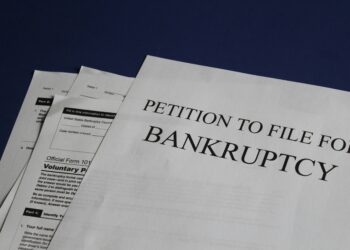
On April 16, QVC Group, Inc. and certain U.S. subsidiaries — including QVC, HSN, Ballard Designs, Frontgate, Garnet Hill, and Grandin Road — commenced voluntary Chapter 11 proceedings in the U.S. Bankruptcy Court for the Southern District of Texas.15 The prepackaged filing is supported by a Restructuring Support Agreement with holders of a significant majority of funded debt and contemplates reducing principal debt from approximately $6.6 billion to roughly $1.3 billion — a sharper deleveraging than the February press reporting had suggested.16
The plan provides for vendors, suppliers, and other general unsecured creditors to be paid in full, there are no planned layoffs or furloughs, and the company expects to emerge within a 90-day window.17 That structure — vendor-friendly prepack with aggressive balance-sheet rightsizing — is becoming the template for retail and media issuers whose top-line erosion has outrun the cash-interest capacity of their capital stacks.
Middle market retail lenders should parse the QVC filing for two specific signals. First, the ~80% funded-debt reduction confirms that secured lenders are increasingly willing to accept steep haircuts (or equitization) rather than litigate a potential freefall. Second, the vendor-payment carve-out preserves the operating model and reduces the reorganization risk profile for ABL revolvers secured by inventory and receivables. Expect similar prepack structures to be telegraphed in other over-leveraged consumer discretionary and cable-media credits in the quarters ahead.
First Brands Estate Narrows to Litigation as IP Sale Faces Late Bid
The First Brands Group Chapter 11 — filed in 2025 after allegations of off-books receivables financing — entered a new phase this week. Recent court filings indicate that, after the company completes the liquidation of remaining operations and shuttered factories, litigation claims will be its most valuable remaining asset, with estate professionals assessing actions against former insiders, lenders who may have received preferential transfers, and third parties tied to the alleged fraud.18
A federal judge this week also delayed the $25 million sale of twelve First Brands trademarks — including the recognizable Trico wiper brand — to allow auto-electronics producer NOCO Co. to submit a competing bid after NOCO argued the estate had failed to adequately market the IP portfolio.19 Separately, First Brands confirmed the permanent closure of its Hebron, Kentucky warehouse by end of April, eliminating 76 positions in what is now the 17th shuttered facility and bringing total job losses in the case to roughly 4,000.20 Former Chief Strategy Officer Michael Baker testified in an April 6 filing that Patrick James and other insiders used his reputation to build relationships with lenders while “concealing separate books and limiting access to financial information.”21
The First Brands case has already reshaped diligence practices for middle-market ABL and cash-flow lenders. Covington & Burling’s recent analysis notes that bankruptcy-remote structures long assumed to insulate securitization vehicles are now being tested in the case—a reminder that structural protection is only as strong as the integrity of the information flowing into the collateral base.22 Lenders underwriting receivables-based facilities should treat the “two-set-of-books” allegations as a directive to demand direct obligor confirmations, independent collateral audits, and explicit perfection opinions on every draw.
Blue Owl Redemption Pressure and PIMCO’s $400MM Show of Support Define BDC Week
The nontraded BDC segment absorbed two competing signals this week. On April 15, PIMCO purchased all $400 million of bonds issued by a Blue Owl Capital private credit fund — an unusually concentrated vote of confidence at a moment when spreads on similar vehicles had blown out to multi-year wides on concerns about lending standards and software-sector exposure to AI disruption.23 Institutional demand is, per BlackRock’s latest commentary, “accelerating” even as retail investors flee.24
The retail flight is real and measurable. Q1 2026 data confirms a 40% year-over-year slump in BDC capital formation and retail sales, the sharpest contraction in the sector’s history.25 Investors tried to pull roughly $5.4 billion from two Blue Owl private credit funds in Q1, forcing the firm to cap withdrawals at 5% of NAV; one vehicle—Blue Owl Credit Income Corp. (OCIC) — received redemption requests equal to 21.9% of outstanding shares. Moody’s responded by revising the BDC sector outlook to negative.26
Credit quality, so far, is holding. Blue Owl reported non-accruals at just 0.6% of debt investments at cost as of year-end 2025 — among the lowest of rated peers. But Morgan Stanley has warned that private direct lending defaults could surge to 8%, well above the historical average of 2.0–2.5%, with pressure concentrated in software and other AI-exposed sectors.27 The biggest losers will be lower-middle-market lenders that chased yield in 2024 and are now seeing non-accruals drift toward 5%. Middle market credit committees should pull BDC exposure reports immediately and reassess concentration limits, valuation governance, and lookback liquidity covenants on any fund-finance or NAV facility exposed to the segment.
Healthcare Leads a Middle Market M&A Rebound as Boston Scientific, Gilead, and Sutter Pursue Megadeals
Healthcare M&A volume hit a five-year high in Q1 2026, with strategic acquirers deploying balance-sheet capacity into targets across devices, biotech, and systems.28 Boston Scientific’s $14.5 billion acquisition of Penumbra is the largest deal of the quarter, extending its cardiovascular and neurovascular franchise. California-based Sutter Health’s planned merger with Minnesota-based Allina Health would create a system generating roughly $26 billion in annual revenue, and Gilead Sciences announced the acquisition of German biotech Tubulis in a deal worth up to $5 billion ($3.15 billion upfront plus $1.85 billion in milestones).29
Below the megadeal layer, American Industrial Partners agreed to acquire Avanos Medical for approximately $1.27 billion, a classic middle-market carve-out-sized transaction that will test how aggressively arrangers are willing to structure acquisition financing in the current spread environment.30 Middle market M&A sentiment sits at a six-year high, with 58% of advisors calling the deal environment “strong” and 90% of private equity respondents expecting steady or higher deal flow in 2026.31
For middle market lenders, healthcare has become the sector most likely to produce quality pipeline in 2026. Credit metrics are typically recession-resistant, covenant packages have held up better than software in recent vintage deals, and the strategic bid is supporting secondary valuations when sponsors exit. Expect unitranche paper on middle-market healthcare buyouts to price tighter than the market-wide 500–550 basis point range as arrangers compete for share.32
SEC 2026 Exam Priorities and the 401(k) Private-Markets Rule Reshape the Distribution Landscape
The SEC’s Division of Examinations 2026 Priorities document — now fully operative — elevates private credit, private funds with extended lock-ups, side-by-side management conflicts, and newly registered private-fund advisers as focal points.33 The emphasis on valuation governance, allocation conflicts, and interfund transfers is directly relevant to BDC managers who must demonstrate that cross-fund trades and gate-activation decisions were conducted consistent with client best interests during the Q1 redemption surge.
In parallel, the Department of Labor’s implementation of the August 2025 executive order on alternative assets in 401(k) plans is moving toward its February 2026 proposed-rule milestone and an expected late-2026 final rule, with DOL–SEC harmonization on valuation, custody, and plan-sponsor disclosure to follow.34 For private credit managers, the defined-contribution opportunity represents trillions of dollars of potential permanent capital that could materially reduce the sector’s dependence on retail BDC flows currently in redemption.
Middle market lenders should be preparing on two fronts. First, BDC-affiliated managers need audit-ready documentation of valuation methodology, third-party pricing inputs, and gate-activation governance — these will be the first items requested on any 2026 SEC exam. Second, managers evaluating 401(k) product launches should be scoping liquidity-sleeve design, NAV-strike frequency, and fiduciary-safe-harbor structuring now; the winners in that race will be firms that can demonstrate institutional-grade controls in a retail wrapper.
Liability Management Playbook Matures as Q1 Leveraged Loan Volumes Disappoint
Q1 2026 U.S. leveraged loan volumes plummeted 34% versus prior quarter, with spreads, volume, and credit quality all flashing “risk-off” per recent market data.35 The mismatch between market expectations — which priced in an M&A resurgence powering new-issue supply — and reality has been driven by tariff and trade-policy uncertainty, AI-driven concerns about software credit, the Iran conflict’s inflation spillover, and diminished rate-cut expectations.36
What new-issue primary activity has lost, liability management has gained. The Harvard Law School Bankruptcy Roundtable’s April 7 analysis describes 2026 as “a tale of two themes: aggressive liability management exercise tactics, and a larger volume of owners tossing the keys to creditors or distressed sales.”37 Drop-down and uptier transactions — pioneered in large-cap credits — are increasingly migrating down market into middle-market credits where loan documentation was never tested against these structures.38
For middle market lenders, the defensive playbook is well-established and bears repeating: audit J. Crew and Serta blockers in every new credit agreement, demand pro-rata-sharing provisions with teeth, require anti-uptier and anti-drop-down language covering all material-subsidiary transfers, and build “J. Crew-plus” protection into intercreditor agreements. Every lender relationship executive should be in a position to articulate, on demand, the three specific LME risks embedded in the top five positions in the portfolio. With new-issue spreads stuck near 500–550 basis points and little catalyst for further compression, the ability to protect recoveries in distressed situations will increasingly separate the best-performing managers from the pack.39
Items to Discuss in Your Monday Meetings
Pull BDC and Interval-Fund Exposure Reports Immediately. Given Blue Owl’s 21.9% Q1 redemption requests and Moody’s negative sector outlook, every institution with direct BDC holdings, fund-finance facilities collateralized by BDC LP interests, or NAV-based lending to credit funds should generate an exposure matrix by Monday morning. Review gate mechanics, valuation-frequency disclosures, and any reliance on secondary-market marks that may be stale.
Stress-Test Oil-Exposed Borrowers Both Ways. With WTI below $85 on the ceasefire and the April 21 two-week window set to expire, run margin sensitivities on transportation, chemicals, logistics, and agricultural borrowers at both $75 (continued de-escalation) and $110 (ceasefire collapse). Update coverage-ratio covenant projections accordingly and flag any borrower within 0.25 turns of a maintenance test.
Audit Liability Management Protections in the Top Five Exposures. Using the April 7 Harvard analysis as a framework, pull credit agreements for your largest five positions and confirm the presence of J. Crew and Serta blockers, anti-uptier language, and material-subsidiary transfer restrictions. Identify any position where drop-down or non-pro-rata exchange risk is not adequately documented, and schedule amendment conversations before a distressed situation forces your hand.
Review Valuation Governance Documentation. With SEC 2026 examination priorities explicitly targeting private credit valuation methodology and side-by-side management conflicts, any firm managing both a BDC and separate accounts should stress-test its last three cross-fund trades and pricing-input documentation. Board-reported valuation variance reports should be audit-ready by end of Q2.
Build a Healthcare Middle-Market Pipeline Play. With Q1 2026 healthcare M&A at a five-year high and sector credit profiles holding up better than software, direct origination teams should be actively calling on healthcare-focused sponsors about new-buyout financings and refinancings. Expect spreads to price 25–50 basis points inside the 500–550 bp market range for quality healthcare services paper, but structural protection should remain non-negotiable.
Looking Ahead
The week ending April 18 will be remembered as the week risk repriced twice—once lower on the March CPI shock, then decisively higher on the Iran ceasefire—while the slower-moving middle market story continued in the background: retail BDC redemptions, a prepackaged mega retail bankruptcy, a bellwether fraud case edging toward liquidation, and healthcare M&A pulling strategic buyers back into the deal market. The common thread is bifurcation. Institutional private-credit demand is accelerating even as retail capital flees; large strategics are writing $10 billion-plus checks even as middle-market new-issue volume falls 34%; borrowers with clean capital structures are refinancing at spreads not seen in over a year, even as weakly protected credits are being subjected to increasingly creative LMEs. For middle market lenders, the near-term imperative is clear: the easy part of the cycle is behind us, cyclical and structural pressures are converging, and disciplined underwriting, documentation, and relationship selection will matter more in the next twelve months than they have in the last three years. Next week, the April 29 FOMC decision, the expiration of the two-week Iran ceasefire on April 21, and a heavy Q1 BDC earnings calendar will all combine to test whether this week’s risk-on tone was the start of something or merely a relief rally.
Footnotes
- 2026 Strait of Hormuz crisis, Wikipedia. https://en.wikipedia.org/wiki/2026_Strait_of_Hormuz_crisis
- Weekly Market Recap – April 18, 2026, Financial Synergies. https://www.finsyn.com/weekly-market-recap-april-18-2026/
- U.S. oil price plunges below $84 as Iran declares Strait of Hormuz open, CNBC. https://www.cnbc.com/2026/04/17/oil-prices-wti-brent-israel-lebanon-ceasefire-trump.html
- CPI inflation report March 2026: Consumer prices rose 3.3%, CNBC. https://www.cnbc.com/2026/04/10/cpi-inflation-report-march-2026.html
- Here’s the inflation breakdown for March 2026 — in one chart, CNBC. https://www.cnbc.com/2026/04/10/cpi-inflation-march-2026-breakdown.html
- Fed Rate Hold Probability Reaches 94.8% for April 2026 FOMC Meeting, MEXC News. https://www.mexc.com/news/982205
- Consumer Price Index – March 2026, U.S. Bureau of Labor Statistics. https://www.bls.gov/news.release/archives/cpi_04102026.htm
- CPI report: US inflation tripled last month on record spike in gas prices, CNN Business. https://www.cnn.com/2026/04/10/business/live-news/us-cpi-march-inflation-iran
- CME FedWatch Tool, CME Group. https://www.cmegroup.com/markets/interest-rates/cme-fedwatch-tool.html
- FOMC Minutes, March 17–18, 2026, Federal Reserve. https://www.federalreserve.gov/monetarypolicy/fomcminutes20260318.htm
- Employment Situation Summary – March 2026, U.S. Bureau of Labor Statistics. https://www.bls.gov/news.release/archives/empsit_04032026.htm
- Oil prices plummet after Iran says Strait of Hormuz is “completely open”, CBS News. https://www.cbsnews.com/news/iran-war-oil-prices-plummet-strait-of-hormuz-open/
- Stock market news for April 17, 2026, CNBC. https://www.cnbc.com/2026/04/17/stock-market-today-live-updates.html
- Treasury Yields Snapshot: April 17, 2026, Advisor Perspectives (dshort). https://www.advisorperspectives.com/dshort/updates/2026/04/17/treasury-yields-snapshot-april-17-2026
- QVC Group Files Chapter 11 Bankruptcy, National Jeweler. https://nationaljeweler.com/articles/14888-qvc-group-files-for-chapter-11-bankruptcy
- QVC Group to Significantly Strengthen Financial Position, QVC Group Investor Relations. https://investors.qvcgrp.com/news-media/press-releases/detail/667/qvc-group-to-significantly-strengthen-financial-position-as
- QVC Files Chapter 11 to Slash Debt and Pursue Growth, PYMNTS.com. https://www.pymnts.com/news/retail/2026/qvc-files-chapter-11-to-slash-debt-and-pursue-growth/
- First Brands Left With Lawsuits as Major Asset After Bankruptcy, Bloomberg. https://www.bloomberg.com/news/articles/2026-04-16/first-brands-left-with-lawsuits-as-major-asset-after-bankruptcy
- First Brands Judge Delays Sale of 12 Brands to Allow Late Bid, Bloomberg Law. https://news.bloomberglaw.com/bankruptcy-law/first-brands-judge-delays-sale-of-12-brands-to-allow-late-bid
- Troubled automotive parts company to permanently close Tri-State site, Local 12 News. https://local12.com/news/local/troubled-automotive-parts-company-to-permanently-close-cincinnati-site-first-brands-group-hebron-fram-bankruptcy-layoffs
- Ex-First Brands Officer Says He Was Kept in the Dark About Fraud, Claims Journal. https://www.claimsjournal.com/news/national/2026/04/14/336828.htm
- Bankruptcy-Remote Structures Tested in First Brands Group Cases, Covington & Burling LLP. https://www.cov.com/en/news-and-insights/insights/2026/01/bankruptcy-remote-structures-tested-in-first-brands-group-cases
- Pimco Buys All $400 Million of Bonds Sold by Blue Owl BDC, Bloomberg. https://www.bloomberg.com/news/articles/2026-04-15/pimco-buys-all-400-million-of-bonds-sold-by-blue-owl-bdc
- Private credit institutional demand accelerating despite BDC news – BlackRock, PitchBook. https://pitchbook.com/news/articles/private-credit-institutional-demand-accelerating-despite-bdc-news-blackrock
- The Private Credit Panic of 2026: BDC Sales Plummet 40%, FinancialContent. https://www.financialcontent.com/article/marketminute-2026-4-6-the-private-credit-panic-of-2026-bdc-sales-plummet-40-as-default-shadows-lengthen
- Blue Owl fund outlook cut by Moody’s after redemption surge, Alternative Credit Investor. https://alternativecreditinvestor.com/2026/04/08/blue-owl-private-credit-fund-outlook-cut-by-moodys-after-investor-redemption-surge/
- Private credit’s “zero-loss fantasy” is coming to an end, CNBC. https://www.cnbc.com/2026/03/25/private-credit-defaults-loan-quality-debt-risk-systemic-ai-disruption.html
- Health care M&A hits 5-year high, BenefitsPRO. https://www.benefitspro.com/amp/2026/04/13/health-care-ma-hits-5-year-high/
- Healthcare M&A Deal Volume Stalls in Q1:26, LevinPro HC, GlobeNewswire. https://www.globenewswire.com/news-release/2026/04/15/3274559/0/en/Healthcare-M-A-Deal-Volume-Stalls-in-Q1-26-According-to-Acquisition-Data-from-LevinPro-HC.html
- Healthcare M&A in 2026: A Roundup of Deals, Xtalks. https://xtalks.com/healthcare-ma-in-2026-a-roundup-of-deals-4615/
- Middle-market M&A set to expand in 2026 as deal confidence hits multi-year high, InvestmentNews. https://www.investmentnews.com/equities/middle-market-ma-set-to-expand-in-2026-as-deal-confidence-hits-multi-year-high/264726
- Middle Market Leveraged Finance Update, Capstone Partners. https://www.capstonepartners.com/insights/middle-market-leveraged-finance-report/
- 2026 SEC Exam Priorities for Registered Investment Advisers and Registered Investment Companies, Goodwin Procter. https://www.goodwinlaw.com/en/insights/publications/2025/12/alerts-privateequity-pif-2026-sec-exam-priorities-for-registered-investment-advisers
- Executive Order Opens the Door to Alternative Assets in 401(k) Plans, Seyfarth Shaw LLP. https://www.seyfarth.com/news-insights/executive-order-opens-the-door-to-alternative-assets-in-401k-plans.html
- Q1 US Leveraged Loan Market Wrap: Volume, spreads, credit quality all flash risk-off, Yahoo Finance / PitchBook LCD. https://finance.yahoo.com/markets/stocks/articles/q1-us-leveraged-loan-market-211741502.html
- The Great Credit Bifurcation: Leveraged Loan Market Plummets 34% in Q1 2026, FinancialContent. https://markets.financialcontent.com/stocks/article/marketminute-2026-4-6-the-great-credit-bifurcation-leveraged-loan-market-plummets-34-in-q1-2026
- Liability Management 2026: For Better or Worse, Harvard Law School Bankruptcy Roundtable. https://bankruptcyroundtable.law.harvard.edu/2026/04/07/liability-management-2026-for-better-or-worse/
- Liability Management Exercises (LMEs): The “Drop-Down” and “Uptier” Playbook Reshaping Distressed Middle Market Credit, ABF Journal. https://www.abfjournal.com/liability-management-exercises-lmes-the-drop-down-and-uptier-playbook-reshaping-distressed-middle-market-credit/
39. 2026 Distressed Outlook: Heated Debtor-Creditor Rivalry, More Change-of-Control Restructuring, Octus. https://octus.com/resources/articles/2026-distressed-outlook/