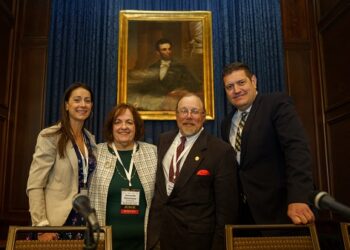


Co-Founder and CEO
Turning Rock Partners
This lyric from Sondheim’s legendary musical1 seems fitting these days. With a U.S. Presidential election ahead, Federal Reserve Chairman Jerome Powell’s announcement that “the time has come” for rate cuts, combined with ongoing market volatility through the summer’s end, the skies do feel strange and the winds strong.
U.S. GDP growth was up 2.8% during the quarter through June 30, 2024, and up over 3.0% year over year. Consumer spending largely flowed towards recreational goods and vehicles, furnishings and durable household equipment as well as energy products. During the second quarter, we also saw a pickup in business investment spending on fixed assets and inventory purchases. Notably, an 11.6% increase in equipment investment this quarter was the fastest since a 16.8% rise in the Q1/22 when the U.S. economy was still recovering from the recession. The biggest factor was transportation equipment, which accounted for 0.42 percentage points of the growth. Spending levels were partly supported by gains seen in wage levels.2
Growing Confidence
Increased capital outlays in fixed asset spending, even in higher interest rate environments signal growing confidence. Many of the larger cap corporates (even those beyond the Mag 7) demonstrated revenue and margin stability through the second quarter. Reviewing data through mid-August, over three quarters (78%) of companies in the S&P showed an earnings beat and over half beat revenue consensus levels. Imminent recession fears are somewhat abated for now.3
Inflation Inching Down
In terms of inflation, we appear to have made progress towards the Fed’s goal of 2% as evident with the May and June data. We could call the Fed’s ‘data-driven’ actions relatively successful. That said, nominal prices for goods and services remain elevated and appear fairly sticky. Labor markets require continued monitoring as private sector job growth has weakened.4
Stable Spreads
Credit spreads are remaining relatively stable. Looking forward, if weaker growth (or potentially political developments such as higher expected tariffs on imports) were to flow through the system, we might anticipate a market reaction.
Office Vacancies
Distress in commercial real estate continues, notably within the office market. As of the second quarter, office vacancy rates breached 20% for the first time ever. This is a byproduct of shifting work environments and norms. Office vacancies have ticked up for the third consecutive quarter, beyond previous peaks hit in 1986 and 1991, respectively.5 This is weighing on banks which need to hold capital reserves against loans, and we may see higher loan losses than expected.
Political Impact
Political developments are unfolding in the U.S. presidential race as nominations for both presidential and vice-presidential candidates are set, party conventions have completed and the race is on. The implications of a Trump 2.0 versus Harris White House imply wide differences in expectations for trade regimes, government spending and corporate taxes.
Growth Capital
We are seeing our investable universe focus on capital to support growth, primarily in the form of acquisitions, fixed asset purchases and team expansion. For the balance of the year, we are working closely with our companies to review their capital needs, growth forecasts and liquidity projections. Turning Rock portfolios are positioned for modest rate cuts, which are expected to begin in the coming months.
Turning Rock’s focus continues to be with founders who are committed to their core businesses. This market environment underscores the importance of working with a seasoned team that has performed through a variety of market cycles and can capitalize on opportunities as they arise.
Endnotes:
1 Source: Stephen Sondheim, Act II Prologue: So Happy.
2 Source: U.S. Bureau of Economic Analysis.
3 Source: Bloomberg, Federal Reserve and J.P. Morgan U.S. Earnings Scorecard.
4 Source: Bureau of Labor Statistics Monthly Payroll Employment data.
5 Source: Moody’s Analytics.