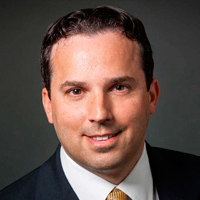
George A. Saitta Jr. Managing Director FTI Consulting
Despite several high-profile COVID-19-related bankruptcies, financial markets are continuing their “bull” runs in 2021. However, some say the large number of transactions in 2021, coupled with a trend of overly optimistic company valuations, foreshadows the possibility for a large financial market reset later this year and beyond. This, in turn, could spark another increase in corporate bankruptcies.
Young companies can draw private equity and placement suitors quickly, particularly in hot spaces like technology and cryptocurrency. As the lifecycle to pursue an initial public offering or a direct listing on an exchange is shortened, management teams should ensure that all operational and financial risks have been properly assessed and the necessary operational and reporting processes and internal controls are in
Scott Perez Director FTI Consulting
This responsibility rests on management’s approach to managing and executing the IPO program, setting the public company up for success and ensuring the necessary infrastructure (e.g., technical accounting, financial reporting and treasury support, etc.) is in place to manage business and financial statement reporting risks. These actions are not only good management practices but also can mitigate bankruptcy risk.
If bankruptcies happen, it is crucial that audit committees, management and legal counsel consider the possibility of fraudulent conveyances or transfers. As
The Role of Forensic Accountants in Bankruptcies Forensic accountants, many of whom are licensed certified public accountants or certified fraud examiners, are uniquely trained to review a bankrupt entity’s financial records and business transactions with an eye toward identifying anomalies. They can provide key insights that might guide or alter key decisions made by the board of directors, audit committees and other stakeholders (e.g.,
Jay Spinella Senior Managing Director FTI Consulting
restructuring officers, ad-hoc investor committees, secured and unsecured creditor committees, and legal counsel). Serving as a trusted advisor to company management and the restructuring team, forensic accountants can add another layer of scrutiny during bankruptcy proceedings. They can contextualize a company’s corporate governance and internal controls, business records, bank statements, financial systems and subledgers. They also can identify irregularities (e.g., unusual or unexpected accounting journal entries made to improve a company’s asset base as presented in financial statements) that might otherwise seem insouciant or go unnoticed by management.
Any findings uncovered by the forensic accountant’s initial assessment can assist management and a company’s restructuring advisors in identifying the areas that will be best served by a forensic accountant’s investigative skill sets and scope, especially when essential staffing resources may be limited.
How Forensic Accountants Can Help
During the second half of 2021 and beyond, continued COVID-19 pressures, such as variant mutations or logistical issues related to vaccine distribution, could further complicate market and company financial performances and elevate bankruptcy pressures. When disputes arise related to bankruptcy, stakeholders need as much transparency as possible into how the company was operated and managed prior to a Chapter 11 filing. To ensure there is no fraud related to a company’s bankruptcy filing and to provide the context around the events leading up to the bankruptcy, forensic accountants can play a key role in telling the story, validating the books and records of a company, and ensuring that assets were not misappropriated or hidden leading up to the bankruptcy. Insight gleaned from a forensic accountant can help a bankrupt company continue its ongoing operations, learn from past experience and successfully exit Chapter 11 proceedings.
The views expressed herein are those of the author(s) and not necessarily the views of FTI Consulting, its management, its subsidiaries, its affiliates or its other professionals.
George A. Saitta Jr. is involved in the leadership of the SEC and accounting advisory services practice of FTI Consulting in Washington, DC. Scott Perez is a director in the SEC and accounting advisory practice for FTI Consulting. Jay Spinella is a senior managing director in the SEC and accounting advisory practice for FTI Consulting.